
Emojis and reactions are a useful shorthand, and also a great way to reply without sending an entire email of a word or two. Microsoft Outlook is one such app that allows for this. If, however, you’ve suddenly found that these features aren’t working as they should, then you’re no doubt looking for answers.
In this article, we’ll be offering fixes for Microsoft Outlook reactions not working.
What You Need for Outlook Reactions
Before we look at the fixes, it’s important to know what you need to enjoy Outlook reactions:
- Either a work or school account with an attached 365 subscription in Outlook
- Both you and the sender of the email have Exchange Online mailboxes. If the sender isn’t using Exchange Online, your reaction is sent as a fallback email instead.
- An Outlook platform updated as of 2023, or version 2308
In addition, if included in the BCC, any reaction you send will only be seen by you and the recipient, not anyone else.
Microsoft Outlook Reactions Not Working – Fixes to Try
If you have a problem with Microsoft Outlook reactions not showing, we’ve got some fixes below to try:
Check Your Account Type
If you’ve just learned about the reaction feature and wonder why it’s not on your Outlook, start by checking what account you have. Reactions aren’t available for Personal accounts, but only for work or school, as mentioned above. Both the desktop app and online version of Outlook should be able to support this.
Check Exchange Online and BCC
Another two requirements we mentioned earlier. Ensure that the relevant mailboxes use Exchange Online. If you’re in the Bcc field, you can still react, but your reaction will only be visible to you and the sender. The former will affect your ability to react, and the latter will affect others being able to see your reaction, besides the sender.
Check Whether Reactions Are Disallowed
Here’s another quick fix that might help. In Outlook, you have the ability to disallow reactions. This option might be enabled by mistake or by default. Reactions being greyed out is an indicator. Here’s how to change it:
Step 1. In the Home tab of your app or browser window, click “New.”
Step 2. With the new email open, switch to the “Options” tab.

Step 3. In the “Tracking” subsection, ensure that “Disallow reactions” is unchecked.
Step 4. Restart Outlook and see if you can now react.
Disconnect Your OneDrive
If you’re using your computer with multiple accounts, you may have your personal OneDrive connected to Outlook in addition to your work or school one. This can cause problems, since personal accounts can’t react. Here’s how to disconnect it in Outlook:
Step 1. Open any Office app on your Desktop.
Step 2. Head to the “File” tab and click “Account” in the sidebar
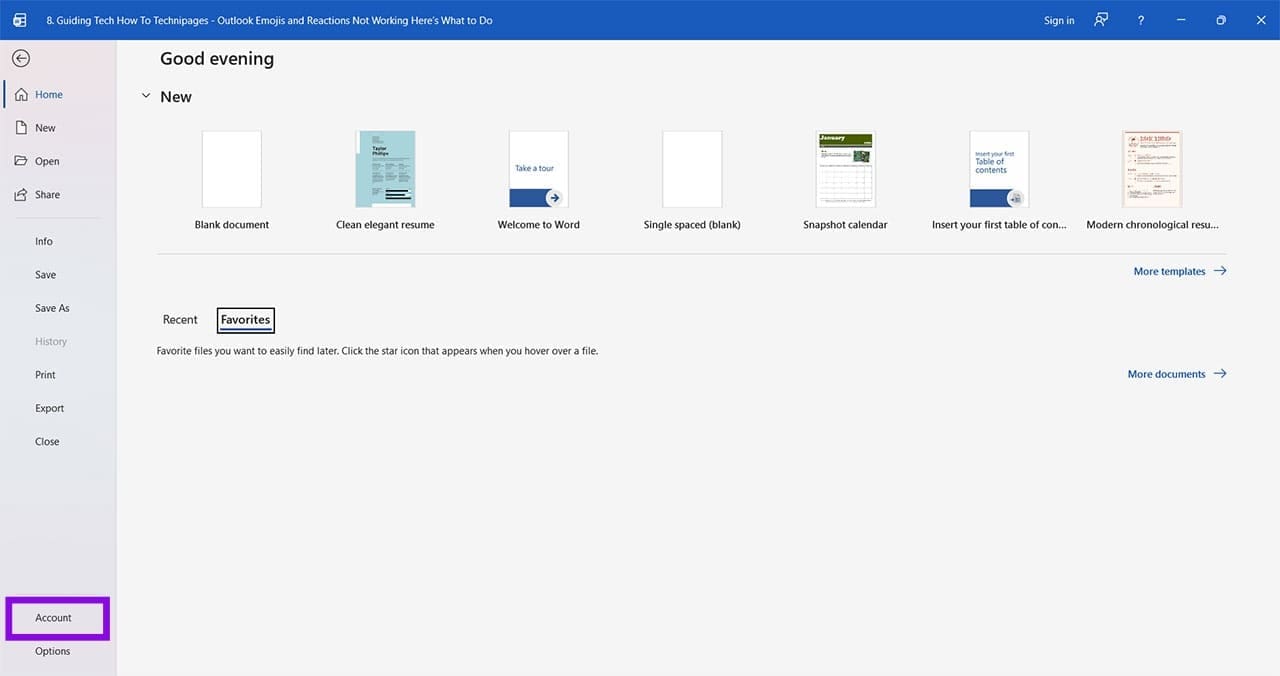
Step 3. Under “Connected Services,” see which OneDrive accounts are listed. If you see your Personal drive, click “Remove” next to it to disconnect the service.
Step 4. Try using the Reaction function in Outlook to see if it works now.
Update Office
It might be that your version of Outlook and Office is out of date and needs an update to run properly. Here’s what to do:
Step 1. Click the “File” tab in any Office app.
Step 2. Click “Account” in the sidebar.
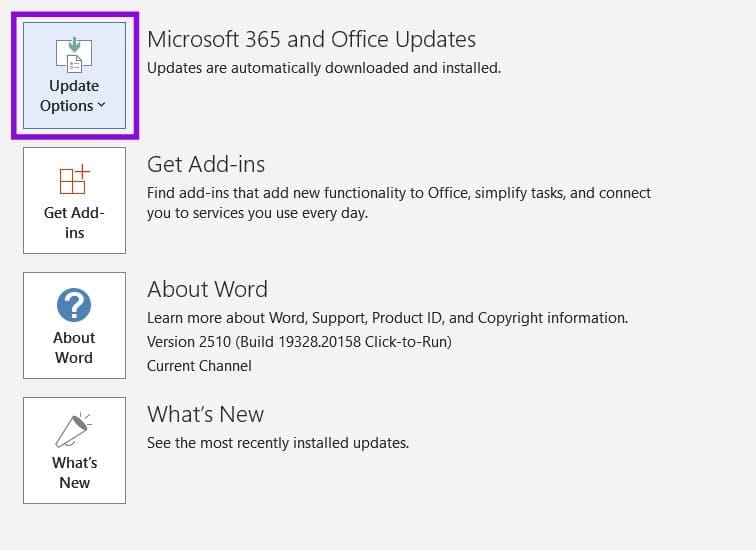
Step 3. Click the “Update Options” button, then “Update Now.”
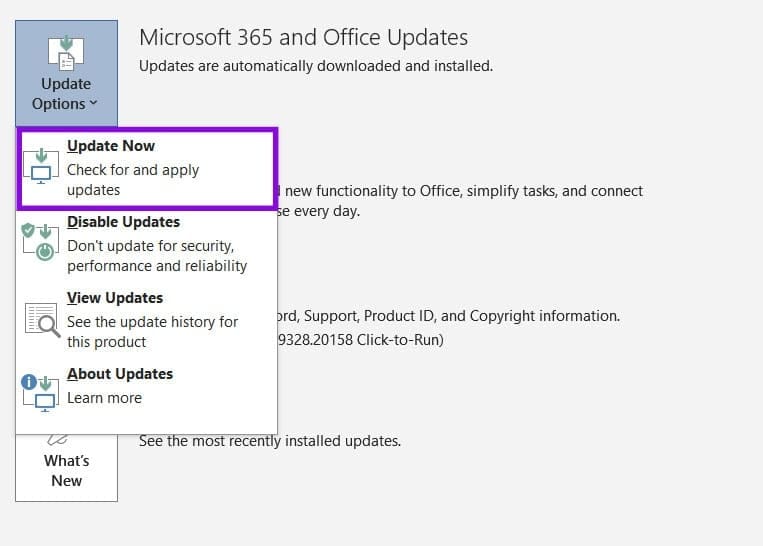
Step 4. Office will install any pending updates.