The OSI (Open Systems Interconnection) model is a conceptual model used to describe the parts that make up a computer network. It is intended to create an everyday understanding for developing networking standards and protocols. The model is pretty useful to help understand the basics of computer networking. It is very worth keeping in mind that the real-world implementation of protocols differs somewhat. There are plenty of layer-crossing protocols. Modern networking concepts don’t necessarily fit into the OSI model well. Still, it is helpful to understand the basics.
The OSI model has seven layers, with the lower numbers getting closer to the bare metal cables that transmit data. The network layer is layer three. In addition, the network layer is responsible for packet forwarding. This includes routing traffic through a local network and routing traffic across a large network like the Internet.
Functions of the Network Layer
The core function of the network layer is to route variable-length packets from the source device to the destination device across one or more networks. All communications over the network layer are “connectionless.” This means there is no immediate need or capability for a destination device to acknowledge receipt of a packet. Connection-oriented protocols exist at higher layers. Suppose a long-term connection must be made. These protocols must be used.
The network layer needs to provide an addressing scheme to enable traffic routing. Typically, these are IP addresses. Two main versions of IP addresses are used, IPv4 and IPv6. IPv4 is exceptionally widely used but has seen its entire address space consumed. Furthermore, to enable the continued growth of Internet-connected devices, the IPv6 addressing scheme was devised. It has much longer addresses which give it an address space sample. It is unlikely to be under any strain for a very long time.
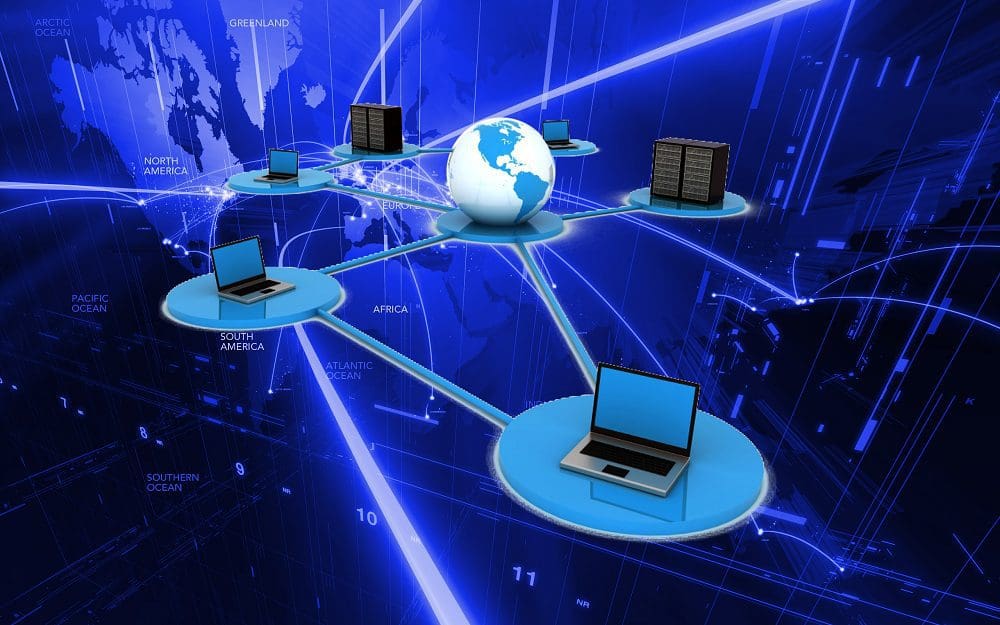
Many networks are subdivided into subnetworks and connected to other networks to form Wide Area Networks (WAN) and often the Internet. Special networking devices called routers to sit on the boundary of networks and can forward packets between them. This enables the conglomeration of more extensive networks and, ultimately, the Internet. In the early days of computer networking, routers were also called gateways. This term has typically fallen out of use. However, it can still be found in use in some places. For example, a computer’s routing table generally lists the router’s IP address as the “default gateway.”
Differences from the TCP/IP Model
The TCP/IP model performs a similar function to the OSI model but is exclusively used to describe protocols on the Internet. The OSI model may deal with any form of computer networking, including those that don’t connect to the Internet. The TCP/IP model has a layer called the Internet Layer. This is often directly equated to the network layer in the OSI model. This is misleading, however, as the Internet layer includes functionality from other OSI model layers. As such, they are not directly comparable.
Conclusion
The network layer is layer 3 in the Open Systems Interconnection model or OSI model. It describes protocols used to route traffic within or across multiple networks. Furthermore, Routers are a key piece of networking hardware that implements this packet routing in the real world. The network layer uses IP addresses as its addressing scheme. Lastly, despite the similarity in name and function, the network layer of the OSI model should not be confused with the Internet layer in the TCP/IP model as there are functional differences.