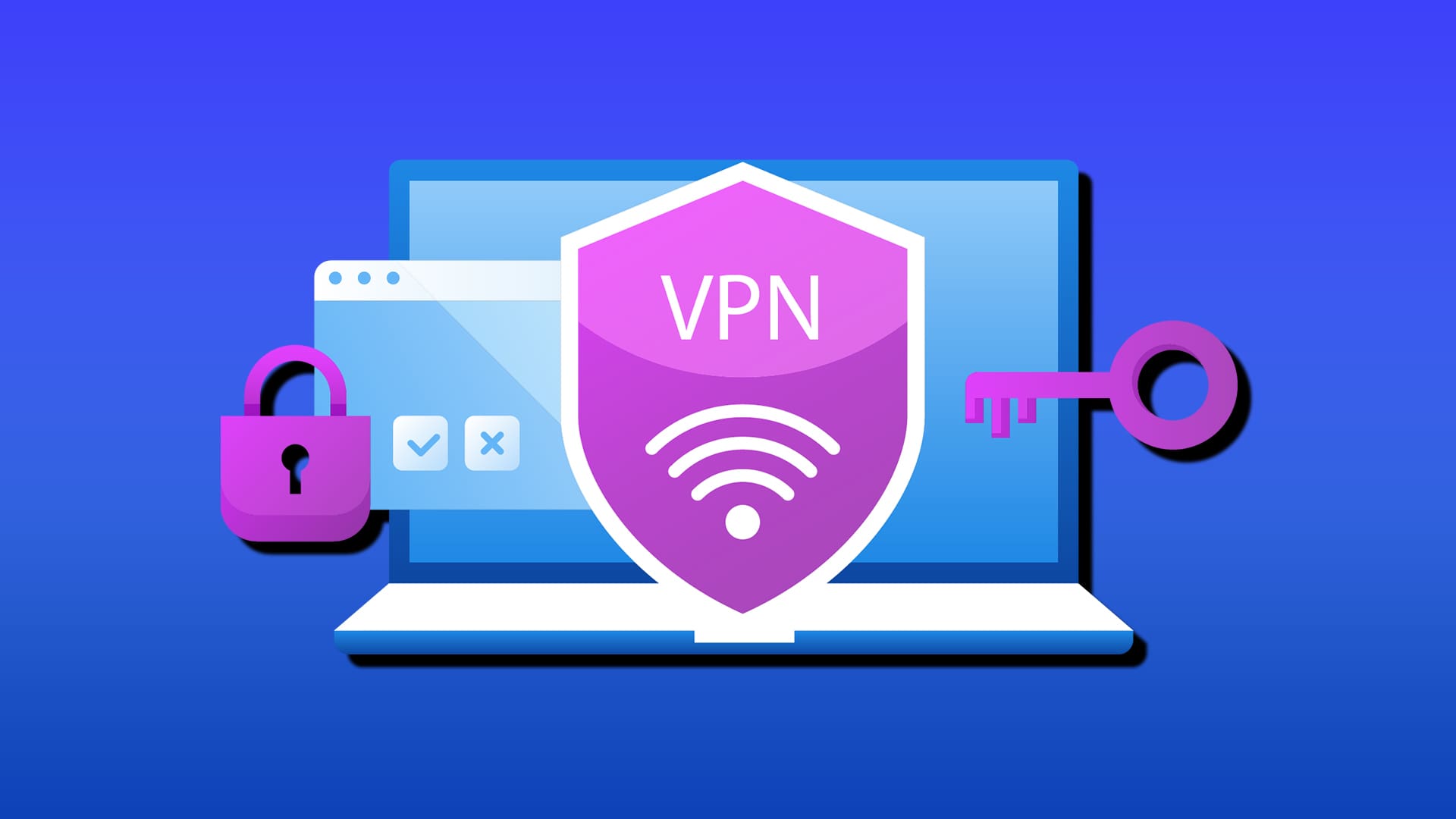
A VPN has become practically necessary if you want to stay safe while browsing or access geolocked content. But there are so many different options on the market, and it can be difficult to discern one top VPN from another. In truth, most premium VPNs will function almost the same for the average user, and the differences will be in the specific features you need. Here is our list of top VPNs to keep your information private.
Contents
NordVPN – Top VPN Overall for Privacy and Security
NordVPN is one of the most reliable options, with access to 181 locations and obfuscated servers in 18 countries to keep your browsing habits hidden from ISPs and governments. Notably, it has passed its sixth independent no-logs audit by Deloitte in early 2026, with the takeaway that it never stores user IP addresses, browsing traffic, or connection timestamps. As such, your data is never actually revealed to a third-party, even if NordVPN gets prompted to share it.
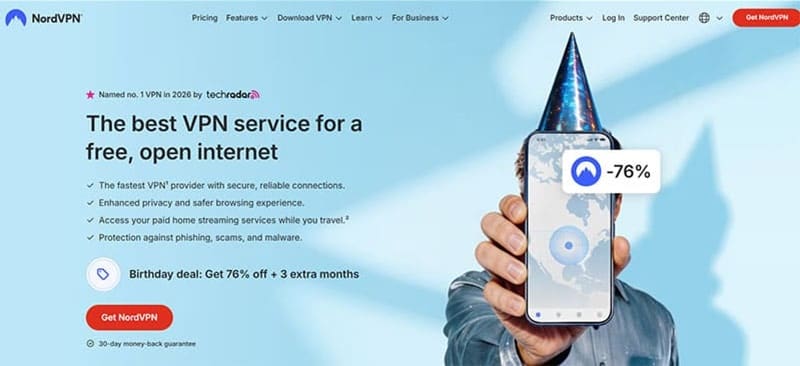
That’s because the VPN uses RAM-only servers that automatically wipe all data on reboot, making it physically impossible for anyone to recover your information after it’s disconnected or powers off.
Feature-wise, its hallmark is Threat Protection, which blocks malware, phishing sites, and trackers even when the VPN tunneling itself is turned off. NordVPN also has a relatively new Dark Web Monitor that alerts you if any of your credentials get leaked online so you can change your passwords and stay safe.
The only downside is that the monthly subscription for NordVPN is relatively steep, but you can get significant discounts if you subscribe for a year or two at a time.
Surfshark – Top VPN for Multi-Device Browsing
If you have a household full of devices or simply want the flexibility to protect everything you own with one subscription, Surfshark is your best bet, as it’s the only major VPN that offers truly unlimited simultaneous connections.
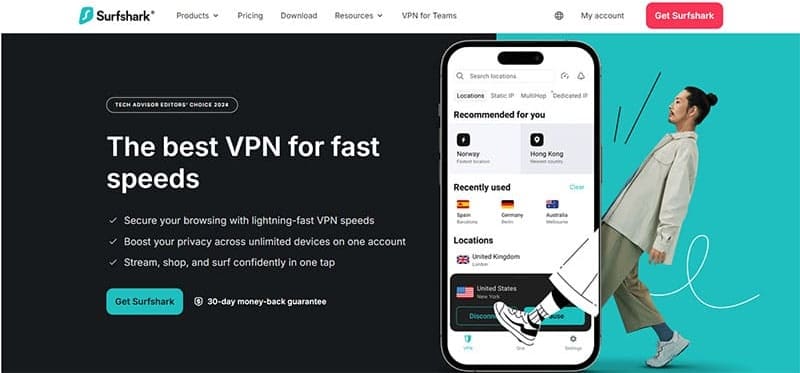
The service boasts having over 4,000 servers in more than 100 countries (all with the same RAM-only infrastructure that prevents long-term data storage).
What gives Surfshark an edge for the average user is its solid collection of privacy tools:
- CleanWeb blocks ads, trackers, and malware across all your browsing.
- Alternative ID generates fake email addresses and personal details you can use when signing up for services.
- Bypasser lets you choose which apps use the VPN and which connect directly (such as banking which is typically blocked from VPNs.
- MultiHop adds additional layers of obfuscation to your browsing data by tunneling through more than one server.
With this suite of options, Surfshark has one of the best feature-to-price ratios out of all VPNs, especially if you find a good discount for a longer subscription.
ProtonVPN – Top VPN with Free Account Options
What makes Proton VPN a bit unique is its transparency. The platform is fully open-source, meaning independent security researchers can inspect every line of code to verify there are no backdoors or vulnerabilities (and have done so). The company also publishes regular transparency reports showing exactly what government data requests they receive (and refuse).
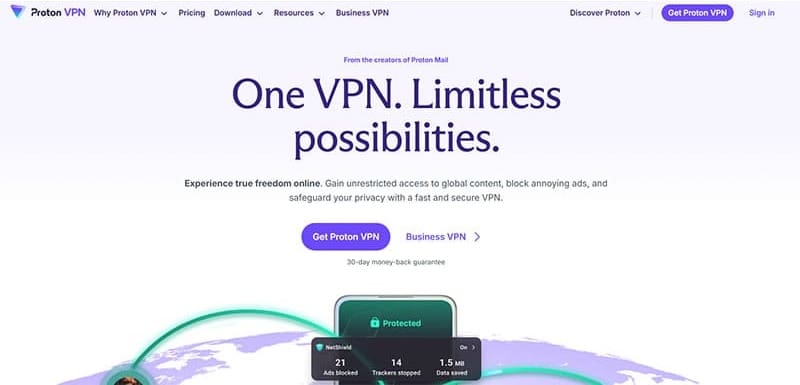
Being a Swiss-based VPN, it also doesn’t conform to a lot of U.S. or EU standards for data regulation and surveillance, which includes data retention requirements. Speed-wise, Proton VPN is considered to be among the fastest options, where your download speed might drop by less than 10% compared to your baseline ISP speed.
Finally, Proton is one of the few major VPNs that offers an unlimited free account. This does limit you to a select few servers (and doesn’t let you choose which to connect to at any given time), but it’s far better than nothing.
ExpressVPN – Top VPN for Ease of Use
ExpressVPN has long been considered the “premium” option in the VPN world. What you’re paying for here is an absolutely polished, hassle-free experience across all platforms, and the pricing structure has also been made more competitive with other VPNs as they entered the market.
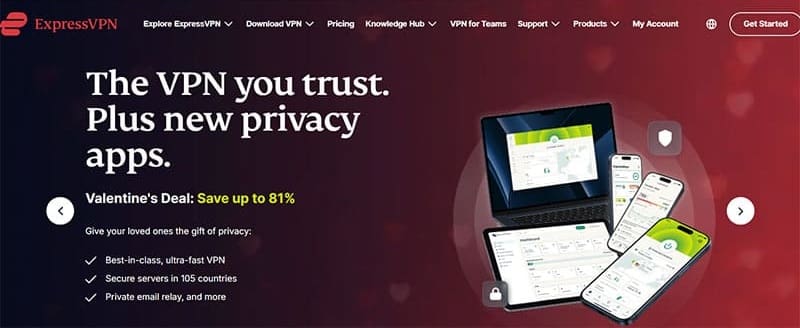
One of its more functional options is the split tunneling feature, which lets you choose which apps route through the VPN and which don’t. It can be handy if you want to go through your banking and streaming apps at the same time (perhaps to purchase foreign content). ExpressVPN also has one of the largest collections of available servers and countries for tunneling.
While it doesn’t offer as many extra features that might pop at you, ExpressVPN has a reliable privacy protocol, a kill switch that prevents IP leaks during connection failures, as well as integrated support for OpenVPN.
Private Internet Access – Best Budget VPN for Privacy
Private Internet Access (PIA) is the value king of VPNs if you want just the privacy protection. This U.S.-based service has been around since 2010 and has been key to ensuring the U.S. follows the rest of the world on online privacy.
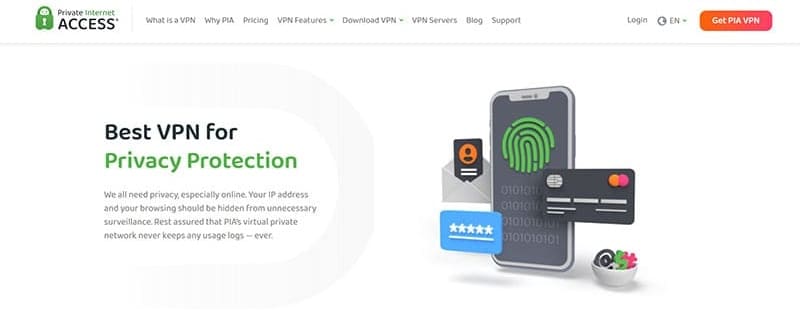
Where PIA really shines is in torrenting. It has dedicated P2P-optimized servers, built-in port forwarding for faster downloads, and a reliable kill switch that blocks all traffic if the VPN connection drops. All of these allow you to safely download files from the internet. The added MACE feature blocks ads, trackers, and malware at the DNS level (similar to NordVPN’s Threat Protection, but this one works only while PIA is on).
The connection speed is solid though not quite as fast as NordVPN or Surfshark, and the app isn’t quite as polished as the other top VPN options. However, at roughly half the price of the next best big VPN, PIA can be a good entry-point offer.