When looking at computers, you may see the performance metrics of some components being listed in MHz. You may also have noticed MHz be used in other situations, such as in the frequency of some radio waves.
The unit MHz is made up of two parts: “M” and “Hz”. “M” is simply the SI prefix for Mega, meaning million. “Hz”, pronounced “Hertz”, is an SI unit that is defined as “cycles per second”. Combined that means that MHz is a measure of millions of cycles per second.
Tip: The SI units, abbreviated from the French “Système international (d’unités)” are the standard units used for most scientific purposes.
Computing
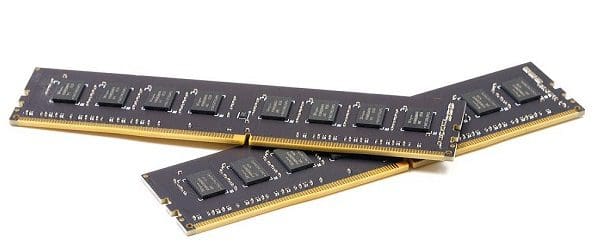
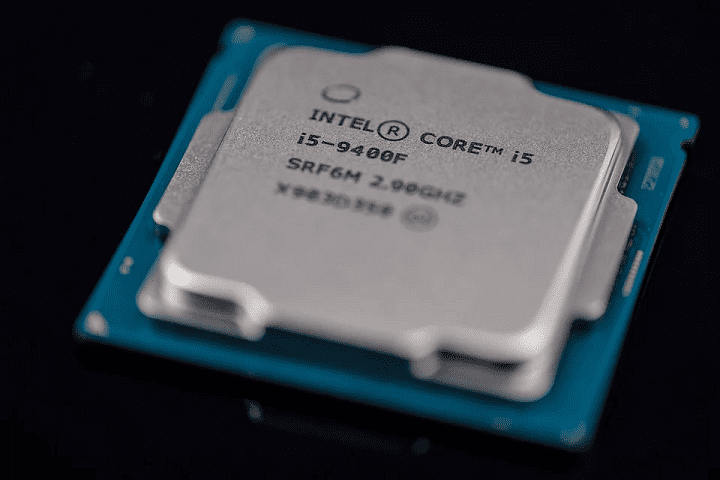
In computing, MHz is used to measure the speed of certain components such as the CPU, GPU and RAM. Higher numbers are faster as more cycles are completed per second. Modern CPUs and GPUs are so fast that they often have their clock speeds measured in GHz rather than MHz. In GHz, the G stands for Giga, meaning billion, so 1 GHz = 1000 MHz. Modern CPUs can operate as high as 5 GHz (5000 MHz), while GPUs tend to run a little slower, nearer 2 GHz (2000 Mhz). While RAM speeds are often also above 1000 MHz, they continue to be measured in MHz rather than GHz.
Electromagnetic waves
In radio waves, MHz is used to measure how many times the electromagnetic wave oscillates per second. The frequency is inversely proportional to the wavelength, meaning photons with a high frequency have a short wavelength and vice versa. A photon with a frequency of 1 MHz has a wavelength of 300 metres while a 1000 MHz photon has a wavelength of just 0.3 metres (30 centimetres), this frequency falls well within the radio spectrum.
Tip: For comparison, visible light has a frequency ranging from 400 THz (TeraHertz, or trillions of cycles per second) for red light, to 789 THz for violet light. This corresponds with wavelengths between 620 nm (nanometres, or billionths of a metre) for red light, and 380 nm for violet light.
The MHz band covers the HF (high frequency) and VHF (very-high frequency) ranges, as well as parts of the MF (medium frequency) and UHF (ultra-high frequency) ranges, as defined by the ITU (International Telecommunication Union). These frequency ranges are used for AM and FM radio transmissions, amateur radio, television broadcasts, mobile phone signals and more.