
Best Resin Printer

- Peopoly Phenom Prime
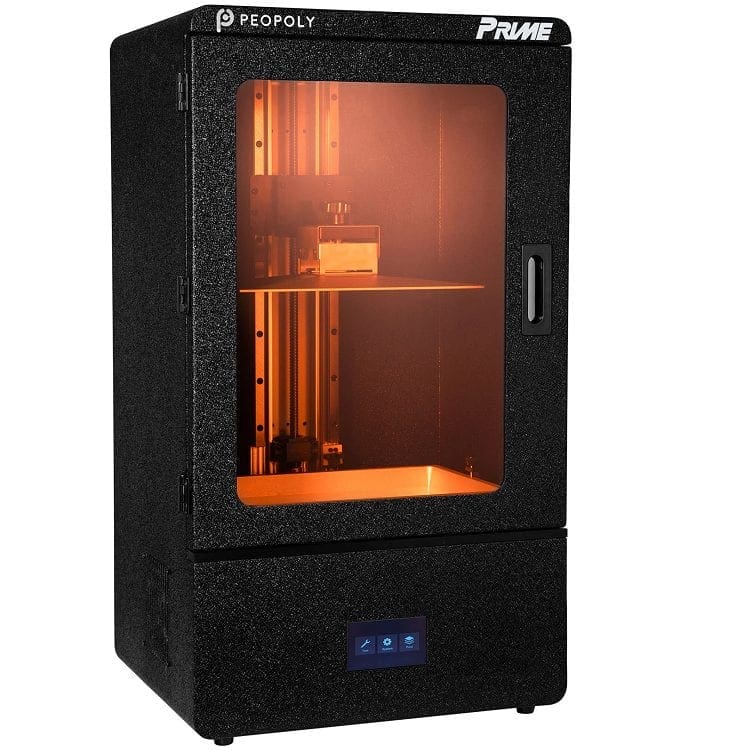
Best Beginners Printer
- Dremel DigiLab 3D45
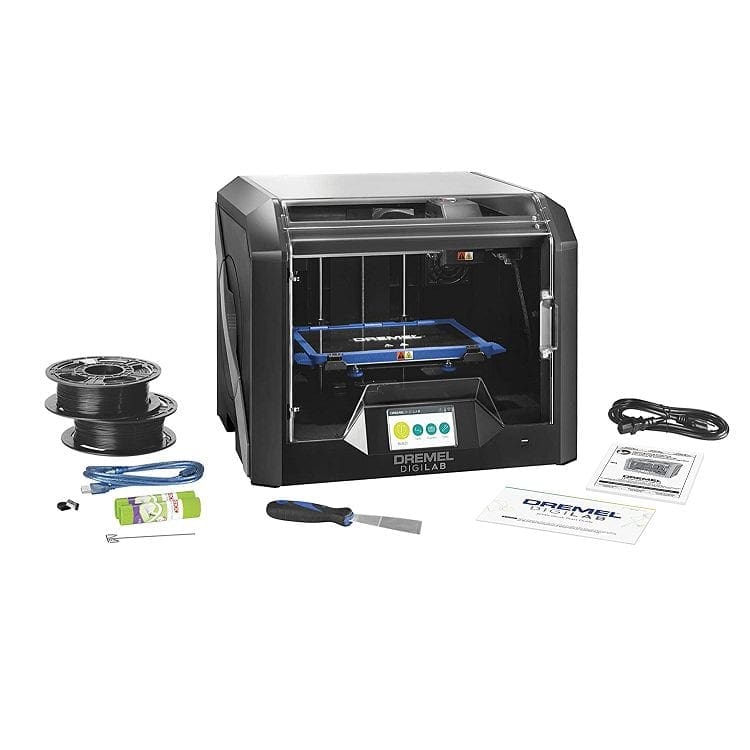
Best All-Rounder
- Original Prusa i3 MK3S+
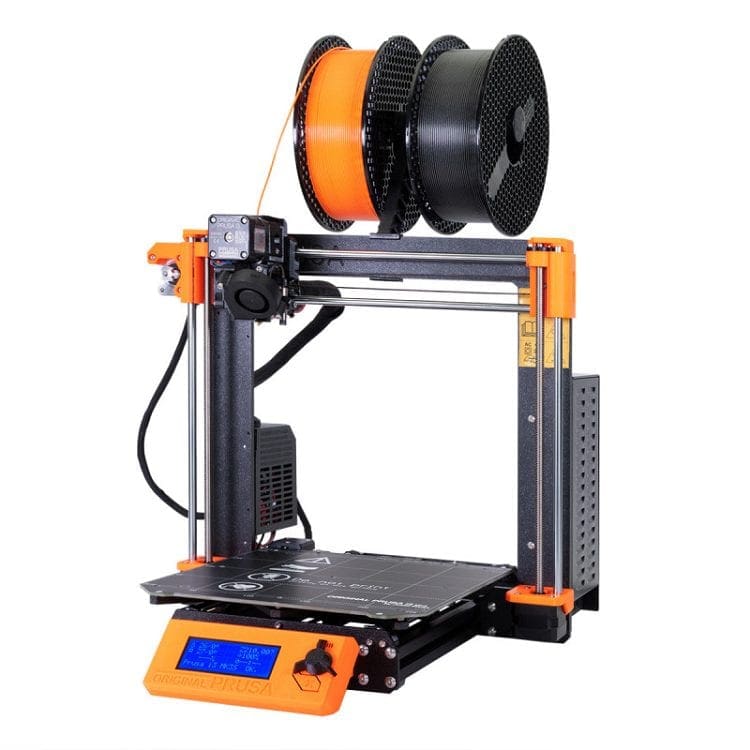
3D printers are great tools if you’re a creative maker type that wants to print your own things. There are a huge range of options though, from materials that you want to print with, to the resolution of the result, and the printable volume. There are budget options available for just a few hundred dollars, top-of-the-line consumer models that can cost thousands, and of course professional-quality ones that can cost hundreds of thousands.
To see our recommendations for the best 3D printers in 2021, read on.
Key Features
- Entirely open source
- Can heat up to 300°C
- Upgrade kits can add more features
Specifications
- FDM
- 250x210x210mm build volume
- SD card and USB Type-B
 The Original Prusa i3 MK3S+ is a Fused Deposition Modelling style 3d printer with a printable volume of 250x210x210mm. The print head can heat up to 300°C and can handle a range of materials up to nylon and polycarbonate. Firmware updates are regularly released for this printer which resolve any discovered bugs and also occasionally add new features. The included software is solid but not required as you can use third-party software if you prefer.
The MK3S+ is available as both a kit and in a pre-assembled form, although the assembled version costs $300 more. There are also upgrade kits for the MK3S if you have the previous version. Unfortunately, when using the SD card reader to transfer print files, the interface can get really slow. You should also be careful when mounting the print plate as the magnetic attachment system is quite strong and can result in trapped fingers.
- Available as a kit or assembled
- Can handle a range of different filament types up to nylon and polycarbonate
- Regular firmware updates can add new features
- The magnetically attached print plate can trap your fingers if you’re not careful
- Interface can be slow
- Assembled version is $300 more
Key Features
- Dual printing means you can print dissolvable support structures
- Up to 240°C
- Enclosed chamber is deal for temperature sensitive materials
Specifications
- IDEX
- 200x148x150mm build volume
- SD card and USB
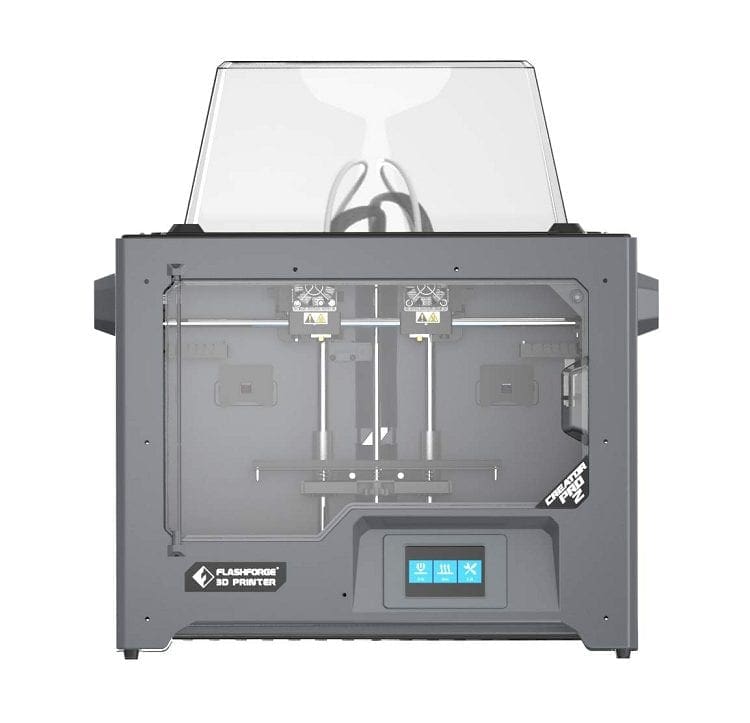
The Flashforge Creator 2 Pro updates the previous design by switching to an IDEX, or Independent Dual Extraction, format. This allows it to print two pieces at the same time, use two different colours in a single build or use different materials to create a support structure that can be dissolved away.
The build volume is a little small, meaning it can’t make the most use of being able to print two things at once. The print head heats up to 240°C which is enough for PLA, ABS, and PETG, but not more exotic materials such as nylon. The included slicing software isn’t particularly great and the rear filament holders are basically useless.
- Well priced for an IDEX printer
- Supports consumer filaments PLA, ABS, PETG
- Build volume is a little small
- The filament holders aren’t up to scratch
- Dated and required proprietary software

Key Features
- Super quiet at around 45dB
- Can heat up to 270°C
- Large build volume
Specifications
- FDM
- 300x300x400mm build volume
- SD card and USB
The Artillery Sidewinder X1 V4 is has a large volume of 300x300x400mm and uses the FDM printing method. The print head can heat up to 270°C meaning it can handle standard filament materials as well as PVA and HIPS. While the plate and head heat up quickly, the plate doesn’t heat up evenly or particularly accurately, with some users reporting a 10° offset and a 25° variance between the centre and corners of the plate.
It’s generally accepted that with this model, one of the first things you print is a replacement filament holder as the included one isn’t great. Printing a fan duct for the print cooling fan is also recommended to improve performance. On particularly tall prints the print head can end up wobbling, the effect can be reduced by slowing the print speed but not really eliminated, making it difficult to make full use of the available height.
- Neat ribbon cables
- Heats up quickly
- Easy to use onboard menu
- Terrible filament holder
- Build plate doesn’t have even or accurate temperatures
- Some wobbling near the maximum height
Key Features
- Integrated 720p camera
- Can get up to 280°C
- Can autodetect proprietary materials and adjust settings accordingly
Specifications
- FDM
- 250x150x170mm build volume
- USB, Wi-Fi, and Ethernet
The Dremel DigiLab 3D45 is an FDM 3D printer, aimed primarily at education markets, that comes with a 250x150x170mm build volume. It comes with education software that provides models aimed at all levels of education. The enclosed environment helps to prevent kids from burning their fingers while the HEPA filter designed to protect against unpleasant smells and harmful VOCs.
The print head can get up to 280°C, allowing for more exotic materials like nylon. Unfortunately, the printer generally performs noticeably worse with third-party filaments than it does with slightly more expensive proprietary ones. This isn’t so much of an issue for schools or businesses where a validated product is great, but may be an issue for those wishing to experiment with new filament types. The inclusion of a 720p camera is a nice addition that allows for live streams of builds and time-lapses.
- Works well with first-party filaments
- Included education-oriented program
- Enclosed unit with HEPA filter
- Doesn’t work reliably with third-party filaments
- Proprietary filaments are a little more expensive than average
Key Features
- 51μm resolution
- 5448×3064 pixel monochrome screen
- Each layer takes 2-3 seconds
Specifications
- MLSA (Resin)
- 276x155x400mm build volume
- USB and Ethernet
The Peopoly Phenom Prime is a resin printer that has a 276x155x400mm build volume and a 5.5K monochrome screen enabling a print resolution of just 51 microns. MLSA works by curing photosensitive resin by displaying a mask of the current layer on an LCD screen with a UV backlight. The high resolution of the screen increases the resolution of the printed resin while the use of a monochrome screen increases print speeds by almost 70% and screen longevity by up to 200% compared to earlier screens.
Be warned, all resin printing can smell bad, is actively toxic for the environment, and requires PPE so it’s not exactly beginner-friendly. This specific printer isn’t cheap either, at $2800, however, given the large build volume, performance, and feature set, this is actually pretty reasonable.
- Well priced for a resin printer of its size and feature set
- High-resolution resin prints
- Speed and screen longevity increase over previous model
- Expensive
- Resin printing can smell quite bad, is toxic, and requires PPE
- Requires a lot of cooling
Those were our recommendations for the best 3D printers in 2021. Have you recently bought a 3D printer? Which model did you go for, and what sold you on it? Please also share the first thing you made, and what you’re most looking forward to making with it, we’d love to hear your ideas.
